Showing posts with label ATI. Show all posts

Monday, August 30, 2010

ATI Radeon branding will be changed to AMD Radeon

The rumors are true! AMD intend to phased out the ATI logo on future branding of graphics processors, which are developed by engineers of ATI Technologies, which AMD acquired back in 2006.

A major motivator is the fact that AMD plans to introduce a range of new products incorporating both AMD microprocessor technology and a Radeon graphics tech on the same chip. The first fruits of the CPU-GPU "Fusion" initiative are slated to arrive soon. "Ontario," which will combine two copies of the low-power "Bobcat" CPU core with Radeon graphics, is slated to ship before the end of the year. The more powerful "Llano" APU, which mates quad Phenom II-class CPU cores with presumably a more capable GPU, is scheduled for the first half of 2011. Obviously, the combination of the firm's CPU and GPU technologies into single-chip products could create some consumer confusion, if folks were to continue to think of AMD and ATI as separate entities—especially if the ensuing marketing messages emphasize the benefits of CPU-GPU integration.

Furthermore, AMD tells us it feels confident in making this change right now because its graphics business is "on good track," having surpassed rival Nvidia in discrete graphics shipments last quarter, according to analyst estimates, and having secured high-profile design wins with the likes of Apple. Also, the chastening of Intel via its settlement with the FTC gave AMD some extra assurance that the expansion of its brand into graphics wouldn't hurt its relationships with major PC makers.

According to AMD's own survey results, consumers savvy enough to know something about discrete graphics cards tend to know the Radeon name, they tend to like AMD, and they don't mind seeing the AMD name on graphics cards once they realize AMD merged with ATI. The folks at AMD read those results as "permission" to jettison the ATI brand name.


The plan is to replace "ATI Radeon" and "ATI FirePro" with "Radeon" and "FirePro", along with a sprinkling of AMD corporate identity. The badges you see above will be used for systems with discrete Radeon and FirePro graphics cards. The lower row omits the AMD logo, so PC makers shipping Intel-based systems will be able to avoid the oil-and-water combo of Intel and AMD branding, if they wish.

However, end-users are likely to miss the ATI logotype since in general people associate the brand with high quality, performance, experience and so on. Besides, 25-years old trademarks like ATI are generally recognizable.

Some analysts said the re-branding of ATI Radeon into plain Radeon may become the worst branding decision ever made by AMD due to the fact that ATI has a larger scope on the market of discrete graphics chips than AMD does on the market of CPUs.

Official statement from John Volkmann : Evolving the AMD Brand Portfolio

Friday, August 13, 2010

Upcoming AMD CPU & GPU Update

New Phenom II and Athlon II are scheduled for launching on September 21. Leading the new batch will be the Phenom II X6 1075T. With a $230-240 price tag and a 3GHz clock speed (or 3.5GHz with Turbo Core), that part should bridge the gap between the $199 1055T and the $295 1090T.

At the same time, the 3.5GHz Phenom II X4 970 should become AMD's new quad-core flagship. There will be two types of AMD Phenom II X4 970 BE CPUs: boxed versions aimed at retail market will be based on the well known code-named Deneb design that has four cores in total; tray flavours of the chips designed for system integrators and OEMs will be based on Zosma design, which is basically six-core Thuban chip with two disabled cores that can be unlocked on certain mainboards.

Also coming : a couple of CPUs priced at around $100: the Phenom II X2 560 and Athlon II X4 645. The new parts will indeed be 100MHz quicker than the existing Phenom II X2 555 and Athlon II X4 640, or 3.3GHz and 3.1GHz.

Meanwhile, AMD is preparing to introduce the Radeon HD 6000-series (Southern Islands) formally in October with retail availability to follow in November. DigiTimes claims that changes in foundry firm TSMC's roadmap led AMD to scrap plans for 32-nm GPUs (code-named Northern Islands) and build Southern Islands products using the same 40-nm process as today's Evergreen chips. Build on the same 40nm, savvy pricing and architectural improvements should be the only weapons at the new Radeons' disposal.

DigiTimes adds that AMD will cut prices across the Radeon HD 5000 series "in the near future".

Thursday, August 5, 2010

Apple’s New iMac & Mac Pro Powered by ATI Radeon

Apple has selected the world renowned ATI Radeon™ graphics solutions for the new line of Apple® iMac® and Mac Pro® tower. Now featured in Apple Stores as well as online retail, ATI Radeon graphics offer outstanding power and performance as the standard configuration for the new iMac and Mac Pro tower which will hit store shelves soon.

“Apple buyers demand the best, and AMD’s award-winning ATI Radeon graphics enable exceptional visual experiences for iMac users,” said Matt Skynner, corporate vice- president and general manager, GPU division, AMD. “AMD has conducted extensive testing and research to create superior graphics products for the iMac. This research is designed to dramatically enhance the Mac-user experience so that Apple users can enjoy responsive performance and play the newest games.”

The high-performance ATI Radeon™ HD 5770 graphics card features 1GB of GDDR5 memory from AMD and enables blistering fast Mac Pro graphics technology. Ideal for motion graphics, 3D modeling, rendering, or animation, the card comes standard; for more demanding tasks purchasers can upgrade to ATI Radeon™ HD 5870 graphics.

ATI Radeon™ HD 5750 graphics are available in the new 27” iMac. The ATI Radeon™ HD 5650 graphics are available in the new 22” and 27” iMac.  Last but not least, ATI Radeon™ HD 4670 graphics are available in the new 22” iMac .

Wednesday, July 14, 2010

AMD Technology Helps Bring “Predators” To Life on the Big Screen

Troublemaker Studios utilized Six-Core AMD Opteron™ processors and ATI FirePro™ graphics accelerators to create animations and special effects for the new film “Predators”, now in theaters. Produced and executive directed by acclaimed film maker, Robert Rodriquez, Predators stars Academy Award winning actor Adrien Brody in a tale about a group of elite warriors who come to realize they’ve been brought together on an alien planet…as prey.

With a long history in the movie making industry, Troublemaker Studios is using AMD technology to push the envelope of digital movie making and special effects in several blockbuster films.

In addition to “Predators”, Rodriguez has looked to AMD technology to create six of his movies, including “Shorts”, “Spy Kids 2: The Island of Lost Dreams”, “Spy Kids 3D: Game Over”, “Planet Terror”, and “Sin City”.

Rodriguez’s next film, “Machete”, is currently in production employing AMD technology as the movie’s digital hardware backbone, and is expected to be released on September 3, 2010.

The creative team at Rodriguez’s Troublemaker Studios use workstations based upon AMD’s superior ATI FirePro V8800 graphics solutions and Six-Core AMD Opteron processors which enable the digital artist to create and iterate at the speed of thought.”

“With the AMD platforms, my creative team has the freedom to quickly design and animate all the required concepts and designs,” said Robert Rodriguez, Troublemaker Studios. “AMD’s complete platform solution helps turn our visions into reality – we can easily and quickly manipulate images or scenes without the wait process previously associated with computer technology.”

Tuesday, March 2, 2010

The Versatile AMD890GX Chipset

AMD and its motherboard partners today unleashed ATI Radeon™ HD 4290 Graphics with the AMD 890GX Chipset, a versatile, affordable and exceptionally energy efficient solution for an incredible, high definition visual computing experience.

The AMD 890GX chipset redefines the way you play with versatile graphics configurations, including DirectX® 10.1 graphics on the motherboard and support for up to two high-performance ATI Radeon™ Premium Graphics cards with ATI CrossFireX™ technology. The same AMD 890GX motherboard which can be used to build an efficient and slim home theater PC using the integrated ATI Radeon HD 4290 Graphics, can be augmented with ATI Radeon™ HD 5450 Graphics for a dual-graphics performance preview, or upgraded to a gaming powerhouse with ATI Radeon™ HD 5870 Graphics and the visual realism of DirectX® 11.

The AMD 890GX chipset supports the SATA 3.0 6Gbps hard drive interface to help speed application performance, decrease boot times, and provide faster access to information, HD video, photos and more.2 SATA 3.0 technology on the AMD 890GX Chipset can help speed application performance and Windows 7 data access speeds with high-bandwidth SATA 3.0 solid state drives and in multi-drive RAID configurations.

Many AMD 890GX-based motherboards feature SuperSpeed USB 3.0, quickly synchronizing and transferring digital media files on the new generation of USB 3.0 devices. With USB 3.0 and SATA 3.0 support, these platforms are designed to be ready for a new generation of high-speed hard drives and high resolution digital camcorders and media players. The AMD 890GX chipset also includes support for Gigabit Ethernet, HyperTransport™ 3.0 technology, and PCI Express® Generation 2.0 to create a system designed to provide fast data flow resulting in speedier transfers of work, games, and entertainment files.

The first of the AMD 8-series chipsets, these technologies serve as the foundation for 2010 VISION technology for AMD desktop platforms that are scheduled to be announced in the second quarter of 2010 and are designed to be compatible with the upcoming AMD Phenom™ II X6 six-core processor.

A series of tests to check out the 3D performance of the new chipset and compared the AMD 890GX, AMD 785G and Intel HD Graphics:


Resources:
AMD 8-Series Chipsets Product Page
Tweaktown-Asus M4A89GTD Pro/USB3
Overclockers Club-Gigabyte GA-890GPA-UD3H
Guru3D-MSI 890GXM G65
Hardwarezone-MSI and Gigabyte
Neoseeker-Asus and Gigabyte
X-Bit Labs-AMD 890GX in Action

Thursday, February 25, 2010

ATI Radeon HD 5830 Brings Huge Performance, More Choice for DirectX 11 Gaming‏


ATI Radeon HD 5830 graphics card is based on the cut-down version of the code-named Cypress (RV870) graphics processor and features 1120 stream processors, 56 texture units, 16 render back ends, 256-bit GDDR5 memory controller and is clocked at 800MHz. ATI recommends its partners to install 1GB of 4.0GHz memory on the 5830 models graphics boards.

Its recommended price is so far specified vaguely as below $250. Considering the prices of Radeon HD 5850 and HD 5770, we expect the Radeon HD 5830 to cost $200-210.

Product page: ATI Radeon™ HD 5830 graphics product information

Articles :
X-Bit Labs

Tuesday, February 9, 2010

Radeon HD 5570 launches at $79-85


AMD has now added a third sub-$100 graphics card to its DirectX 11 lineup. The new Radeon HD 5570 fits squarely between HD 5670 and HD 5450 with a $79-85 suggested price range.

AMD based the Radeon HD 5570 on the same 40-nm Redwood graphics processor that powers the 5670. Users will still get 400 stream processors, five texture units (for 20 texels/clock fill rate), two ROP units (for a total eight pixels per clock), and a 128-bit memory interface. However, the core clock speed has fallen from 775MHz to 650MHz, and instead of speedy 4Gbps GDDR5, AMD has limited the 5570's memory selection to 1.8Gbps DDR3.

As a result, floating-point number crunching power has fallen from 620 gigaFLOPS on the Radeon HD 5670 to 520 gigaFLOPS on the Radeon HD 5570, and memory bandwidth has dropped similarly from 64GB/s to just 28.8GB/s. These changes appear to have helped the 5570's power efficiency—AMD quotes a "typical" 38W at load, down from 61W. In turn, the reduced power consumption enables a half-height form factor and a smaller cooler. AMD tells us we could actually end up seeing passively cooled 5570s from
some card vendors.

Reviews:
AnandTech
Tom's Hardware
Legit Reviews

Thursday, February 4, 2010

ATI Radeon HD 5450 "Cedar"

Four chips in 6 months reaches its end today, with the launch of the final chip in AMD’s Evergreen stack: "Cedar". Cedar, the baby of the family, will be powering AMD’s bottom-tier cards. Today we’re seeing the the first of what we expect will be a couple of Cedar cards with the launch of the Radeon HD 5450. The ATI Radeon HD 5450 graphics card delivers a state-of-the-art HD multimedia and game experience at a value price. You can expect to find listed soon for $49-59.

The Radeon HD 5450 has 292 million transistors, 80 stream processors, two texture units (each capable of filtering four texels per clock cycle), and a single ROP that can push out four pixels per clock. Radeon HD 5450 graphics cards will have a 650MHz core clock speed, up to 1GB of DDR2 or DDR3 memory with a 1.8Gbps top data rate, and 64-bit memory interfaces. (The $49 part will only have 512MB of RAM, however.)

AMD has a product page for their new Radeon 5450. Radeon HD 5450 Reviews:
AnandTech
Hot Hardware

Thursday, January 14, 2010

Radeon HD 5670 "Redwood"


AMD's DirectX 11 Evergreen family is now proceeding to mainstream arena. We're getting to see the Radeon HD 5670, which should start for about $99. Nicknamed "Redwood", it contains half the execution resources of Juniper, the GPU in Radeon HD 5700-series cards, with the same 128-bit memory interface.

According to AMD, the 5670 will draw just 14W at idle and 61W under a typical load. That means no PCI Express power connectors and hopefully low noise levels, despite the spartan-looking single-slot cooler. The core of the new card runs at 775MHz with 400 stream processors for the core and 1GHz with either 512 MB of 1GB of GDDR5 memory.

AMD advertises Eyefinity support, too, but the maximum number of supported displays is limited to four, and the reference card will only connect up to three displays.

Reviews:
Tech Report
AMDZone
AnandTech

AMD's prized primate, Louie, shows just how easy it is to upgrade your PC with a new ATI graphics card, letting you play the latest games. Want to learn more? Check out http://links.amd.com/SoEasy

Thursday, January 7, 2010

World’s First Mobile Graphics with DirectX 11 Support


AMD today introduced its lineup of next-generation DirectX 11-capable ATI Mobility Radeon™ Premium graphics. AMD has based the Mobility Radeon HD 5800 series on the same 40-nm Juniper silicon as the desktop Radeon HD 5700 series. The Mobility 5700 and 5600 series are both based on Redwood, while the 5400 series is based on Cedar.

There's no Cypress here. That chip specifically for desktop cards like the Radeon HD 5870, and it's basically too big and too hot for laptops.

Speaking of power efficiency, the new Mobility 5000 lineup features "improved engine and memory clock scaling and clock gating," which helps lower power consumption at idle. AMD allows real-time switching between integrated and discrete graphics processors, too, so users can disable their discrete Radeons in order to get longer battery life. The switching technology supports both Intel and AMD platforms.

Other features include Eyefinity hexa-display capability, which you'll find on Mobility 5800-, 5700-, and 5600-series GPUs. Those who opt for Mobility 5400-series parts will be limited to quad-display setups. All of these GPUs also support up to 1GB of GDDR5 RAM, although you may see some of the lower-end parts with smaller amounts of DDR3 or DDR2 RAM. The choice will likely be up to laptop makers.

Lenovo ThinkPad Edge


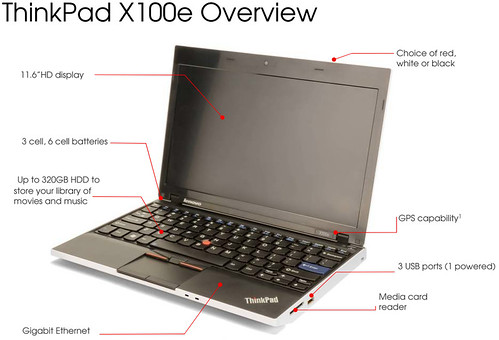
AMD today celebrated an expansion of its business relationship with leading computer manufacturer Lenovo, which is introducing new AMD platform-based laptops. The innovative PC manufacturer this week introduced the first commercial ThinkPad laptops based on VISION Pro Technology from AMD, a new extension of VISION Technology from AMD, that are designed to appeal to key enterprise, SMB and government segments: the ThinkPad X100e, an entry ultraportable starting under $449, and the ThinkPad Edge Series laptops designed for the SMB, starting from $579.

Priced right and engineered for small business, ThinkPad Edge is truly mobile and reliable, with features:
* Powerful AMD dual-core processors
* Windows® 7 operating system
* Gigabit LAN, WWAN with GPS, 802.11bgn WiFi, Bluetooth and WiMAX options
* Thin and light with a 13.3" widescreen
* Spill-resistant keyboard
* Up to 7.8 hours of battery life
* Worry-free ThinkVantage® Technologies
* Enhanced multimedia and HD audio
* Low-light-sensitive Web camera
* Three USB ports (1 powered), 5-in-1 media card reader and HDMI
* Various services and warranty options

The ThinkPad® Edge 13" model features a progressive new design, with clean lines and bold color and finish choices. For more, visit HERE.

Lenovo also plans this quarter to introduce a new IdeaPad based on the 2009 AMD Mainstream Notebook Platform, targeted at the consumer mainstream volume market.

Tuesday, January 5, 2010

Vision Pro Technology

On January 5th, AMD announced VISION Pro Technology, a new commercial PC platform brand that delivers a superior visual computing experience, and can help businesses increase productivity and gain competitive advantage by enabling visually stunning communications, marketing and sales materials.

Graphics matter more than ever in business communication and innovative companies are leveraging balanced PC platform technology to generate and view rich visual presentations including videos and 3D graphics to communicate winning ideas.

Commercial PCs based on VISION Pro Technology from AMD offer out-of-the-box support for multiple monitors, seamless viewing of videos, use of video conferencing software, and the performance necessary to create and view rich presentations with embedded video and 3D graphics.

Additional industry support comes from HP which offers VISION Pro Technology from AMD on select models of its HP ProBook line of business notebooks. The HP ProBook 4415s, ProBook 6445b, and ProBook 6545b are powered by VISION Pro Technology from AMD, enabling these notebooks to deliver compelling PC-based visual support for all forms of business communications including sales presentations, webcasts, and videoconferences.

Security features supported by VISION Pro Technology include the Trusted Platform Module (TPM), AMD’s Enhanced Virus Protection (EVP), and key Windows® 7 Professional features3. AMD client virtualization technology [AMD Virtualization™ (AMD-V™) technology] provides the full, chip-level optimization needed to support legacy applications under Windows XP Mode3.

Find out more about Lenovo and their new ThinkPad Edge and ThinkPad X100e notebooks featuring VISION Pro technology from AMD.

Tuesday, December 1, 2009

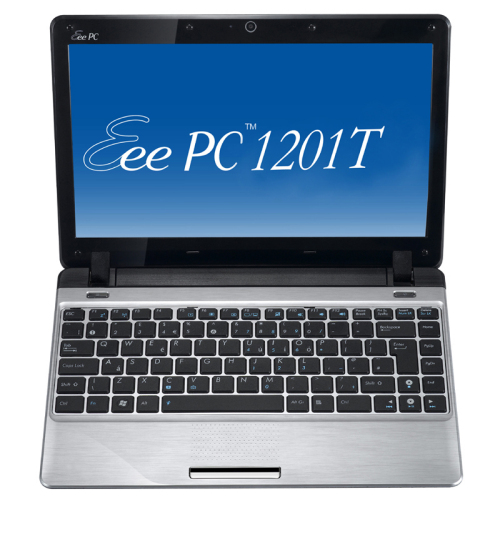
Asus Eee PC 1201T is AMD-based


So far, Asus has stuck with Intel's Celeron and Atom processors for its Eee PC line of netbooks. That could soon change, since Asus is preparing a 12.1", Eee PC-branded system based on AMD's Congo ultraportable platform.

Eee PC 1201T, has a 12.1" 1366x768 display, a 1.6GHz Athlon Neo MV-40 processor, 802.11n Wi-Fi, up to 320GB of mechanical storage, and a six-cell battery rated for up to four hours of run time. It has weight of 3.2 lbs (1.46kg) and a thickness of 1.07"-1.3".


The Congo platform brings two advantages over the Atom and GMA 950 combo found in majority of netbooks: the Athlon Neo processor has a full-featured core with out-of-order execution, and the AMD780-based chipset offers Radeon HD 3200 integrated graphics—a considerably more powerful solution than anything in Intel's portfolio.

Thursday, November 26, 2009

MSI announces Neo X2-based X-Slim X430


This time, MSI has introduced a new member of its X-Slim family with an Athlon Neo X2 processor and Radeon HD 3200 integrated graphics, AMD's latest second-generation Ultrathin Platform Congo.

Equipped with 14-inch, 1366x768 display, MSI has still managed to keep it thin and light. A weight of 3.3 lbs (1.5kg) and a thickness of only 0.96" (24.5mm) at the machine's thickest point. Internally, the new X-Slim also features 2GB of DDR2 RAM, a choice of 320GB or 500GB hard drives, 802.11n Wi-Fi, Bluetooth, Windows 7 Home Premium, and a battery with either four or eight cells.

MSI blends graceful and gentle feather-like lines into a special luminous exterior that features customizable colors around the frame. This gives the X430 a design that embraces a metro fashion sense and displays the individual taste and professional self-confidence that is representative of MSI's craftsmanship and skill. The X430, an ultra-thin, power-saving platform with AMD's latest VISION technology, provides dual-core processing performance and consumer-friendly pricing.

Read MSI News HERE. Product Catalogue HERE.

Saturday, November 21, 2009

Lenovo Readies World’s First AMD-Based ThinkPad


Lenovo is getting ready to unveil the first ever ThinkPad computer with a microprocessor from Advanced Micro Devices. Neither IBM, the original creator of ThinkPad brand, nor Lenovo have ever used AMD chips inside their laptop line.

Lenovo ThinkPad X100e is based on AMD Athlon Neo MV-40 (single-core, 1.60GHz, 512KB cache, 15W, 65nm SOI) and AMD 780V core-logic with integrated ATI Radeon DirectX 10-supporting graphics core. The laptop features 11.6” display with unknown high-def resolution, media card reader, 3 USB ports, Gigabit Ethernet, Wi-Fi, 0.3MP webcam and so on. The mobile computer may be equipped with up to 4GB DDR2 memory; up to 500GB hard drive; various connectivity options, including WWAN, 802.11b/g/n, Bluetooth, GPS and so on, reports Netbooknews.de web-site.


Considering that this is still a ThinkPad, the X100e is equipped with high-quality spill-resistant keyboard, UltraNav trackpoint, business OS support, basic manageability functions and some other functions.

Lenovo plans to offer its ThinkPad X100e globally starting at $449 starting early January, 2010.

Wednesday, November 18, 2009

Hemlock Reclaiming the Speed Crown

AMD has launched their new Radeon HD 5000 series to great success. The Radeon HD 5870 might be the fastest single GPU yet, but it is not the undisputed fastest graphics card. While it is certainly a match for the GeForce GTX 295, it doesn't exactly beat it.

Deviating from the usual "X2" suffix, the new Radeon HD 5970, codenamed Hemlock, is ATI's biggest, boldest and most powerful graphics card yet. The Radeon HD 5970 essentially squeezes two Cypress chips onto a single GPU, and as such the card boasts a whopping transistor count of 4.3 billion, 3200 stream processors, 160 texture mapping units and 64 raster operator units. This makes the new Hemlock card, the most powerful graphics card in existence.


The card comes equipped with 2GB of GDDR5, which is split between the two GPUs, giving it an effective memory capacity of 1GB. The card will be selling for $600, at least so long as vendors and retailers hold the line on MSRP. AMD’s official guidance for this card is that the minimum requirements are a 650W power supply, and they recommend a 750W power supply.

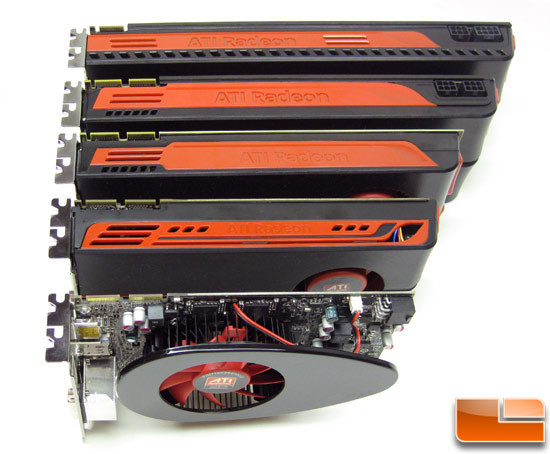
For a size comparison here are all the Radeon HD 5000 series cards lined up. From top to bottom you have the Radeon HD 5970, 5870, 5850, 5770 and the 5750. You can clearly see how large the Radeon HD 5970 is compared to the other cards. It was one inch longer than the Radeon HD 5870! At 12.125" in length Radeon HD 5970 is very long and isn't going to fit in all the cases on the market today.


Reviews:
Legit Reviews
AnandTech
Hardware Zone
Tech Report
AMD at Play

Thursday, October 22, 2009

Windows 7 Launch!


There is a lot to be excited about with this new operating system and AMD technology has been designed specifically to help PC users benefit from the visual experience and features that it brings.


The Windows 7 release is important to AMD for a few reasons:

OEM systems powered by AMD VISION Technology will ship with Windows 7, so on October 22 consumers can walk into retail stores and purchase a new PC with VISION Technology from AMD.

With Windows 7 comes DirectX 11, a key feature supported by award winning ATI Radeon HD 5000 Series graphics products. DirectX 11 will bring new levels of performance, realism and computing power to the PC.

For business customers, Windows 7 has a lot going for it including a new feature called Windows XP Mode that leverages the AMD-V virtualization technology in our CPUs to run older Windows XP software applications in a virtual copy of Windows XP on top of Windows 7.

Friday, October 16, 2009

Radeon HD 5770 and 5750 "Juniper" Jump In


The technology built into the Radeon HD 5870 is propagating to a second GPU in record time. AMD has just introduced a pair of graphics cards based on a new mid-range graphics processor code-named Juniper. Official name is the Radeon HD 5700 series.

Juniper turns out to be quite similar to the RV770 GPU that powers the prior-gen high-end Radeon HD 4800 series. Both Juniper and RV770 have 800 SPs, 10 texture units, four render back-ends, and a single rasterizer. But Juniper is a smaller chip intended for less expensive graphics cards, so it has only two 64-bit memory controllers or an aggregate 128-bit memory interface. Both Cypress and RV770 have 256-bit memory interfaces. Still, the use of higher-clocked GDDR5 memory in the Radeon HD 5700 series will at least help bridge the deficit versus the RV770.

Juniper varies from the RV770 in many other respects. The chip's hardware supports many capabilities exposed in new software APIs like DirectX 11, DirectCompute, and OpenCL 1.0. Don't forget it's manufactured by 40nm fabrication process.


Radeon HD 5770 comes with 10 SIMD engines, cranks away at 850MHz in the 5770, paired with a gig of memory clocked at 1.2GHz. That memory clock translates into a 4.8 GT/s data rate, since this is GDDR5 memory. Happily, Juniper has inherited Cypress's ability to conserve power at idle by dropping its GDDR5 memory into a low-power state. As a result, AMD rates the 5770's idle power at only 18W. Even under load, the 5770 is relatively tame, with a 108W max power rating.

Radeon HD 5750, the 5770's little brother has had one of its SIMD cores clipped, along with the corresponding texture unit. Clock speeds are de-tuned, too, with the GPU at 700MHz and memory at 1150MHz. Thanks to the changes, the 5750 tops out at 86W of power draw and is rated for just 16W at idle.

Another limitation of the 5700 series will be the number of cards supported in CrossFire multi-GPU configurations. Although the cards have dual CrossFire connectors up top, AMD plans to limit them to dual-GPU configs only. Going beyond that will mean moving up to the 5800 series.

The initial suggested e-tail price for the Radeon HD 5770 is $159. The Radeon HD 4870 1GB can be had right now for a prevailing price of about $150 at online retailers. That decision puts the Radeon HD 5770 in more or less direct competition with the GeForce GTX 260, too. Prevailing prices online for the GTX 260 are about $165.

Meanwhile, the 1GB variant of the 5750 will list for $129, where it will have to contend with the Radeon HD 4850 1GB (~$120 prevailing price) and the GeForce GTS 250 1GB (~$140, with some rebates available). Over time, Radeon board makers should begin shipping a 512MB version of the 5750, as well, for around $109.

Game Developers Share Their Thoughts on DirectX 11:


Check out this YouTube video from DiRT 2 showing some of the features that Codemasters incorporated from DirectX 11, creating an incredibly realistic gaming experience:


In this video showcase some of the amazing game-enhancing features that DirectX 11 will bring to the PC version of DiRT 2. The DirectX 11 effects featured in this video are Cloth Tessellation, Hardware Instanced Tessellated Crowd, Tessellated Water with Dynamic Displacement Mapping, Enhanced Lighting and Post Processing. Together these effects make DiRT 2 for Games for Windows Live the most intense, visceral racing game you will have experienced.

More readings here:
Tech Report
AMDZone Review on Sapphire Radeon HD 5770 & 5750
AnandTech
PC Perspective

Wednesday, September 23, 2009

ATI Radeon HD 5800 Series, The First DirectX 11 Compliant GPU


AMD today launched the most powerful graphic processor ever created, found in its next-generation ATI Radeon™ HD 5800 series graphics cards, the world’s first and only to fully support Microsoft DirectX® 11, the new gaming and compute standard shipping shortly with Microsoft Windows® 7 operating system.

Boasting up to 2.72 TeraFLOPS of compute power, the ATI Radeon™ HD 5800 series effectively doubles the value consumers can expect of their graphics purchases, delivering twice the performance-per-dollar of previous generations of graphics products.

AMD will initially release two cards: the ATI Radeon HD 5870 and the ATI Radeon HD 5850, each with 1GB GDDR5 memory. With the ATI Radeon™ HD 5800 series of graphics cards, PC users can expand their computing experience with ATI Eyefinity multi-display technology, accelerate their computing experience with ATI Stream technology, and dominate the competition with superior gaming performance and full support of Microsoft DirectX® 11, making it a “must-have” consumer purchase just in time for Microsoft Windows® 7 operating system.


ATI Radeon HD 5800 series is up to twice as fast as the closest competing product in its class, allowing gamers to enjoy incredible new DirectX 11 games – including the forthcoming DiRT™ 2 from Codemasters, and Aliens vs. Predator™ from Rebellion, and updated version of The Lord of the Rings Online™ and Dungeons and Dragons Online® Eberron Unlimited™ from Turbine – all in stunning detail with incredible frame rates.

FYI, RV870 became known as "Cypress". The official name now is the Radeon HD 5870. Cypress is one member of an entire Evergreen family of products in development at AMD, all of which will share a common technology base. Initially, two cards, the Radeon HD 5870 and 5850, will be based on Cypress. Another code name, Hemlock, denotes the multi-GPU card based on dual Cypress chips that will likely be known as the Radeon HD 5870 X2. Juniper is a separate, smaller chip aimed at the range between $100 and $200. AMD would slot Juniper-based cards into the Radeon HD 5700 series. All of these products are scheduled to be introduced between now and the end of the year, some in rapid succession.


The rest of the Evergreens will fall after Christmas, in the first quarter of 2010. Redwood is slated to serve the mainstream market (i.e., really cheap graphics cards) and Cedar the value segment (really even cheaper, like $60 cards). When all is said and done, AMD should have a top-to-bottom family of 40-nm, DirectX 11-capable graphics card offerings.

Reviews:
Tech Report
X-Bit Labs
PC Perspective

Monday, September 14, 2009

Radeon HD 5870 spotted

Details about the ATI Radeon HD 5870 GPU is spotted on the net. This upcoming product will be launched on 23rd September 2009. It features DirectX 11 and ATI Eyefinity Technology. It accelerates PC with 3 teraFLOPS of computing power. AMD doubled the number of SIMD units from 10 to 20, that means 1600 stream processors and 80 TMUs.


Here are the specifications:
Computing power 2.72 TFLOPS
Core Clock Speed 850MHz
Stream processors 1600
Frame buffer 1GB, 4.8Gbps
Max/idle power 188W/27W
Max resolution 3 x 2560x1600
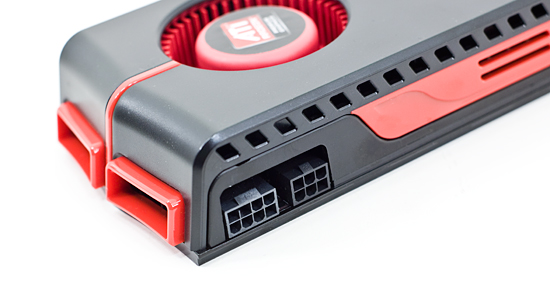
Two 6-pin PCIe power connectors


Demo at Japan AMD/ATI product presentation of a "DX11 future video cards" driving six monitors (@7680x3200) while running a racing game (Colin McRae:DiRT 2).